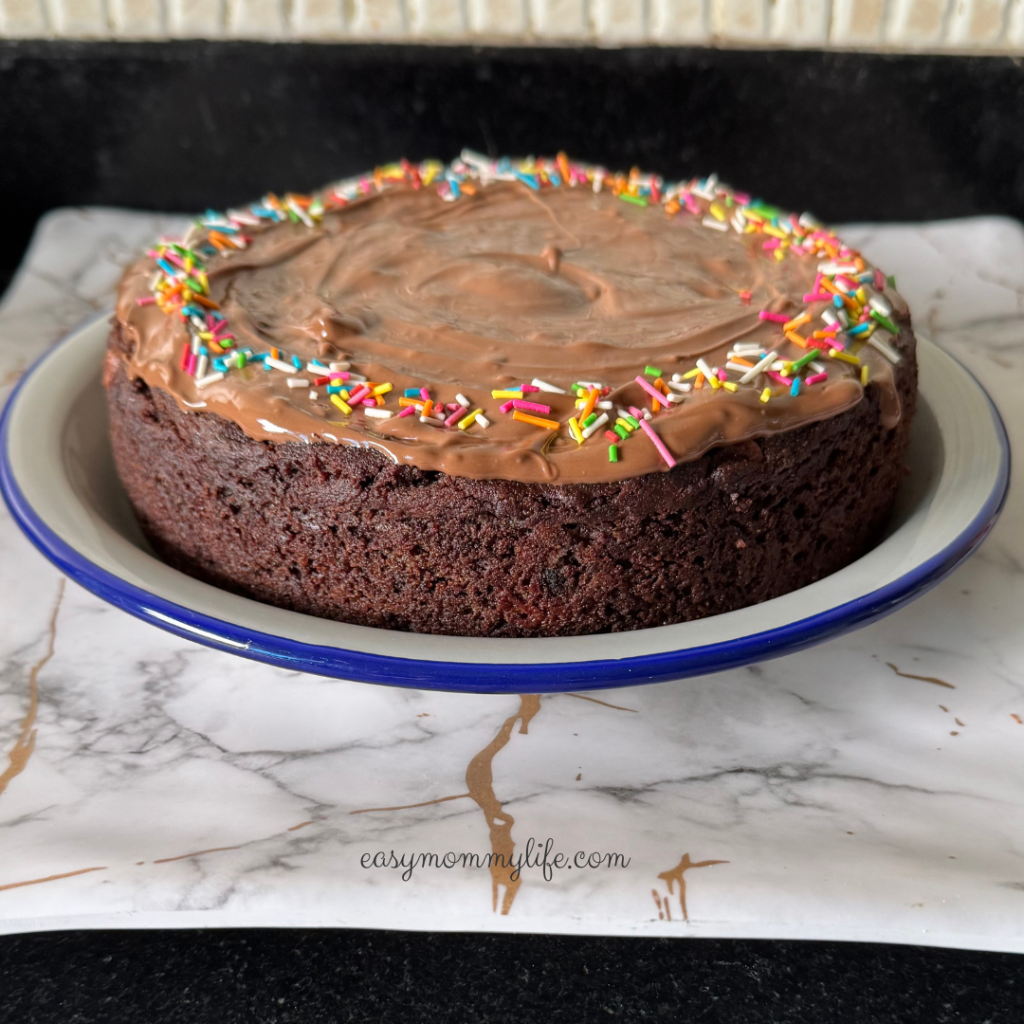
Is your child’s first birthday round the corner? Are you looking for a healthy first birthday cake recipe? I’ve got you covered. This decadent chocolate flavored millet-based cake recipe is my daughter’s favorite. Whenever we are celebrating a milestone or family function, I quickly whip up this chocolate ragi cake and we all enjoy it together.
I used to make this recipe with about 1/2 cup of jaggery but recently I tweaked the recipe when we were celebrating my toddler’s ‘1000 days on Earth’ birthday milestone. The sugar free version of this cake turned out so tasty, I decided this is how I will be making it from here on out.
Documenting this recipe, so future me can also refer back and hope you try this healthy ragi cake and write back to me how you like it.
HEALTHY FIRST BIRTHADY CAKE | NO ADDED SUGAR | NO EGGS
This recipe is perfect as a smash cake or a healthy no added sugar cake for babies and toddlers. Plus, it’s made without eggs which is perfect for those with allergies.
Healthy first birthday cake | No Sugar | No Eggs
Ophira
A baby friendly cake recipe made using millet flour, dates and unsweetened chocolate powder, is perfect as a smash cake or as a celebration cake for under 2 year olds.
15Medjool dates(if smaller size dates use about 20)
1.5cupMilk
1cupRagi flour
1/4cupUnsweetened cocoa powder
1tspPure vanilla extract
1/2cupSunflower oil
1tspBaking powder
1/2tspBaking soda
Instructions
Soak the pitted dates in warm milk for 20 minutes.
Preheat oven, 180 degree C for 15 minutes.
Once the dates are softened blend to make a paste.
In a bowl sift the ragi flour, cocoa powder, baking soda and baking powder
Once the dry ingredients are mixed and ready pour the date paste, oil, vanilla extract and combine to make the cake batter, make sure to not over mix.
Add some chocolate chips or chopped cashews and mix (optional)
Transfer to greased baking tin and bake in the oven at 180 degree C for 30 minutes. Or until an inserted toothpick comes out clean.
Notes
Notes : Variation for date-free cakeIf you want to make a date-free cake, use 1/2 cup jaggery powder instead of dates along with 1/4 cup yogurt.Recipe for the chocolate ganachePour ganache once the cake is completely cooled. The chocolate coating on top is made using half a cup milk chocolate chips and a tsp of coconut oil. Heated in microwave for 30 seconds and mixed to make the chocolate ganache.Pour over the cooled cake and add sprinkles for fun!
Keyword baby friendly cake, first birthday cake, homemade birthday cake, no egg cake recipe, no sugar cake for baby, smash cake, smash cake recipe
Some more no-added sugar based baby-friendly cake frosting recipes I liked,
Bento boxes have become popular on the internet these days. Food presented in a bento box looks aesthetically pleasing and the compartments in the box make it easier to carry a complete meal in one box without hassle.
I tried our first bento box (The Yumbox) back in 2019 when my son was starting school. The ease of opening and closing the box, the different compartments resembling a toddler section plate, and the ease of adding a variety of foods to the box with fewer chances of it mixing are what converted me to the idea of using bento lunch boxes.
For beginners, if you are wondering.
WHAT IS A BENTO BOX?
A bento is the Japanese version of a single portion home-packed meal or take-out meal. A traditional bento usually contains rice, eggs, fish or meat, and some pickled and cooked vegetables.
WHAT TO PUT IN A BENTO BOX?
Other than the traditional bento versions, bento boxes these days are also used to carry a variety of snacks and meals adapted to the lifestyle of the user.
I usually like to add one main dish either some type of wrap, rice dish, patty, or sandwich along with fruits/vegetables and dried fruit and nuts.
This type of lunch box makes it easy to build a balanced meal that is rich in protein, fats, and fiber.
Let’s look at some easy bento box lunch ideas for school and daycare.
BENTO BOX LUNCH IDEAS FOR KID’S SCHOOL
These are bento lunch box ideas for 4-year-olds just starting school, but anyone of any age can enjoy these recipes by adjusting for spice and increasing portion sizes.
You can also try modifications of these recipes for daycare to suit a baby led weaning approach.
Note : Do not offer whole nuts to younger children. Pictures showcase the school lunch box of a 6-year-old.
Modify recipes, swap ingredients, and cut into baby-friendly portions to avoid choking risk when making for younger toddlers and babies. To learn more about baby-led weaning and the preparation of baby-friendly foods read this post of mine.
Ready? Let’s go.
Feta Cheese Wrap for Kids School Lunch
Feta cheese wrap, grapes, cashews, and bananas.
Feta cheese contains fats and protein making it a healthy option to try in moderation. It is a high-sodium cheese so offer in smaller amounts to children over the age of one.
Use a whole wheat chapati or tortilla wrap. For the filling crumble feta cheese evenly over the chapati followed by chopped spinach leaves, tomatoes, a drizzle of olive oil, salt, and pepper. Cut a slit with a knife in one-quarter section of the chapati and then wrap it over to make a triangle.
Toast the wrap on both sides in a hot pan for 2-3 minutes until golden.
Bagel Sandwich
Bagel sandwich, macaron, sunflower seeds, banana.
This sandwich bento box is suited for children over age 2.
To make the bagel sandwich spread out cream cheese, add lettuce leaves, tomato slices, black olives, salt, and pepper. That is it. As easy as that.
Potato Pea Wrap
Potato pea wrap, watermelon, sunflower seeds, orange.
Use wholewheat chapati or tortilla for the wrap. For the filling in the wrap, in a mixing bowl mash 2 boiled potatoes, 1/4 th cup boiled green peas, and add salt, black pepper, pizza seasoning, and oregano. Mix well.
When adding the filling first spread mayonnaise on the chapati and then add the filling, roll, and cut into easy-to-hold pieces.
Ragi Wheat Pancakes
Ragi pancakes, maple syrup, peanut butter, black grapes, and oranges.
Hummus Wrap
Hummus wrap, strawberries, pan-fried french beans, sunflower seeds.
The whole wheat wrap contains hummus, tomatoes, basil leaves, black olives, salt, and pepper.
To prepare the French beans, cut them lengthwise, heat oil in a pan, and add chopped garlic. Once the oil is flavored with the garlic add the chopped french beans and salt. Stir fry until crisp.
Egg Wrap
Egg wrap, chikoo slices, and jackfruit chips.
The whole wheat chapati wrap contains an egg filling made by mixing boiled egg pieces in a dressing of mustard 1/4 tsp, mayonnaise 1-2 tsp, salt, and pepper. Roll and cut into easy-to-hold pieces.
Bean Wrap
Kidney bean wrap, roasted broccoli, grapes, and carrot slices.
The whole wheat bean wrap contains lettuce leaves as a base, boiled and seasoned red kidney beans that are mashed with a fork to make a paste like filling, topped with cheddar cheese and mayonnaise. Wrap and toast on a hot pan for 2-3 minutes on each side until the cheese melts.
Easy Bento Box Lunch Ideas For Kids
Easy school lunch ideas for kindergartners that are also picky eater-approved.
Potato pea wrap, watermelon, sunflower seeds, orange
Bento Box for Kids With Pancake
Ragi wheat pancakes, maple syrup, peanut butter, black grapes and oranges
Kids Lunch Box Hummus Wrap For
Hummus wrap, strawberries, pan fried French beans, sunflower seeds
Bento Box Lunch With Egg Wrap
Egg wrap, chikoo, and jackfruit chips
Bento Lunch Box With Bean Wrap
Bean wrap, roasted broccoli, grapes and carrot slices
Keyword back to school lunch box ideas, bento box lunch for school, healthy meals for kids, lunch box for kids, lunch ideas for school, school lunch ideas
Having extra produce on hand makes it easier to build more nutritious sides instead of adding packaged snacks.
At the same time as children grow older, they get interested in packaged snacks, instead of completely denying them strive to create regular exposures without overdoing it.
Once or twice a week, add chips, chocolates, and biscuits as sides to the school lunch box to meet the child’s desire for such foods too. Meeting the child’s curiosity and exploration of new foods is a part of the intuitive eating approach.
I believe in a family approach to reducing junk food consumption and building balanced meals instead of preaching or having separate rules for kids.
Hope this post gave you some bento lunch box ideas for school. Drop in your child’s favorite bento box meals in the comment below. We can all pick ideas from each other.
It is pumpkin season and one of the ways I enjoy pumpkins is in soups. Pumpkin has a very mild earthy taste that adds a depth of flavor to the soup. Pumpkin soup is a staple in our house during winters and I love trying out new flavor combinations to get maximum taste and nutrition.
Today’s recipe is a combination of pumpkin and carrot that makes this recipe Vit A rich a nutrient that is essential for growing babies and children. The coconut milk adds creaminess to the soup that balances out the earthy flavors from the pumpkin and carrot.
New mothers may wonder,
CAN YOU GIVE PUMPKIN TO A 6-MONTH-OLD BABY?
The answer is, Yes. Pumpkin is a great option as a first food. The flavor profile is mild and most babies enjoy pumpkin in steamed or pureed form. The orange color vegetable has many benefits, it is packed with Vit A, lutein and zeaxanthin that help protect eyesight. Babies need Vit A to support growth and development and to build immune system.
Let’s take a look at this quick and easy pumpkin soup recipe for babies.
Pumpkin Soup For Babies
A creamy and nutritious pumpkin soup for babies, toddlers and kids.
The combination of pumpkin with whole spices, pepper and turmeric alongside healthy fats makes this soup the perfect potion to support immune health in the cold season. I hope this yummy soup adds warmth to your winter table.
Keeping little ones well-fed is a task in itself. Sometimes preparing meals can take up the entire day. But a well thought out meal plan can help you during a busy week. Here are some quick and healthy toddler meal ideas that are suited to the family using readily available ingredients.
These are staple family dinners in our weekly menu rotation and foods our preschooler looks forward to eating at mealtime.
But first, make sure to check out my new eBook, The Easy Toddler Snack Book for quick and healthy snack recipes that your toddler will love. These are tried and tested recipes in our home and my go-to’s to fill in any nutritional gaps from the day. Take a look here.
Ok, are you ready for a week’s worth of quick and easy toddler recipes that you can enjoy as a family?
A quick recipe that can be easily paired with a hard-boiled egg, some fruit and vegetables. There are carbs, protein, vitamins, and minerals all packed in one plate.
Masala noodles can also be used as a school lunch box idea. Kids get excited seeing noodles for lunch.
In a vessel add oil and sauté the garlic and onions.
Once done add the peas and dry masala powder, mix, followed by water.
Let this cook until the peas are ready and the water reduced to nearly half.
Now add in cooked noodles, mix until the masala coats the noodles well.
Serve with a side salad (featured here cucumbers and strawberries) and a boiled egg.
Keyword family meals, healthy meals for kids, picky eater meals, toddler meals, toddler meals for picky eaters, toddler recipes
Mujadara Rice
A quick toddler meal made of lentils and rice. The whole lentils (masoor) add an earthy flavor to the meal. A hearty meal that is so quick to prepare. Lentils like masoor dal are a good source of iron and folate both of which are essential for growing children.
Soak the rice and lentil mix in water and keep aside for 30 mins.
In a pressure cooker add some oil and saute the onions and garlic until they are golden brown.
Add the rice and dal mix followed by 2 cups of water.
Now add the salt, soup powder, and spices.
Close the lid of the pressure cooker and take 2 whistles. Garnish with chopped coriander leaves.
Serve hot with Israeli cut salad and some Greek yogurt as sides.
Keyword family meals, healthy meals for kids, picky eater meals, toddler meals
Dal Khichdi
A staple in our weekly menu now. Dal khichdi contains protein and iron that are much needed by toddlers. This a simple but healthy toddler meal idea for days when you don’t feel like cooking a lot. I like to pair our khichdi with some added vegetables like steamed or roasted broccoli or pan-fried French beans and a fat-rich dip like tahina.
Soak the rice and dal mix in water for 30 minutes.
Heat ghee in a pressure pan, add the ginger-garlic paste and roast in the ghee.
Add the thoroughly washed dal and rice mix to this and follow this by adding turmeric powder, hing powder salt and water.
Take three whistles in the pressure pan and serve with a side of broccoli and some tahini dressing.
Keyword family meals, healthy meals for kids, picky eater meals, toddler meals
Pulav Rice
Whenever we are in a rush this is the quickest meal we can whip up. Pulav rice is a great recipe to incorporate veggies and meet the daily vegetable requirement for the child. Even picky eaters usually like to eat pulav rice and when paired with fresh yogurt with some black salt, the combination is irresistible!
Add garlic, basil leaves, and peppercorn and mix well. Let the spices cook for 2 minutes.
Add the chopped vegetables and mix, followed by the powdered spices. Mix and cook for 5 minutes.
Now add the rice and water and cook until the rice absorbs all the water and fluffs up. This takes about 10 minutes to cook.
Serve with yogurt topped with rock salt.
Keyword family meals, healthy meals for kids, picky eater meals, toddler meals
Pasta Potato Soup
This is a super tasty meal any toddler would love. Ours gulps down the entire bowl in seconds. If you have a pasta lover you have got to try this toddler pasta recipe.
Stir well and add all the vegetables, spices, and pasta to the pot.
Cook until the pasta is cooked through.
Add some butter give a good mix and serve hot.
Keyword family meals, healthy meals for kids, picky eater meals, toddler meals
Vegetarian Stew
If you follow me on Instagram, you’ve seen me make this vegetarian stew a number of times now. We love the mild flavors and heat coming through from the whole spices. It is the perfect recipe during winter and monsoon seasons.
Heat oil in a pot. Add the whole spices first, the cloves, cinnamon sticks, and bay leaf. Fry in the oil for 1 minute. Then add ginger garlic paste followed by onions and saute until the onions are translucent in color.
Once the spices are fried add the vegetables. (You can add any combination of vegetables from what's available in your fridge).
Now add all the dry spice powders, salt, coconut milk, and stir.
Let this cook on a medium flame for 30 minutes until the vegetables are cooked through.
Serve with steamed rice.
Keyword family meals, healthy meals for kids, picky eater meals, toddler meals, toddler meals for picky eaters, toddler recipes
Lentil Coconut Curry
Another under-30-minute meal idea I use on busy nights for dinner. My toddler loves lentils cooked in coconut milk.
If your toddler doesn’t enjoy lentils as much and you are looking for ways to introduce lentils without him taking notice, try my lentil recipes for toddlers and picky eaters here. This post includes a lentil patty, lentil bolognese, and a yummy lentil soup specially designed for picky eaters.
And, if you are looking for more easy recipes check out my ebook The Easy Toddler Snack Book, which contains many yummy recipes like granola bars, frittata, pancakes, smoothie bowls, smoothies, energy balls, and more. Your toddler will love them.
On entering toddler years, children experience a dip in appetite and a slower rate of growth. At the same time, certain nutritional requirements become even more important for proper growth and development. But selective eating behaviors and picky eating make it difficult to meet the growing child’s needs. While it is not recommended to force-feed children or offer distractions at the table, parents do need to be more alert and creative in helping meet the nutritional demands of the growing child.
Here are 5 nutrition hacks every parent must try. These toddler hacks have helped me through the picky eating and teething phase.
Flaxseeds are a rich source of plant-based omega 3’s. Omega 3’s are fatty acids that are essential for heart health and brain development.
The beauty of using flaxseed powder is that in the ground-up form it is more readily absorbed into the body and so easy to use.
Add a tablespoon on porridge, smoothies or add to chapati dough and your child won’t even notice the healthy fats he is eating in his favorite meals. Flaxseeds are perfect for vegetarians and vegans who don’t get their omega 3’s from eggs and fish.
2. Nut butter for life
I rely on nut butter to fill in the nutritional gaps on days of poor eating. Nuts contain an array of nutrients and nut butter is an easy way to get those nutrients on the plate.
Add a little nut butter to toast, smoothies, porridge or on fruit. Most children like the taste of nut butter, popular favorites being almond nut butter and cashew nut butter.
On days with poor or selective eating, one of my favorite go-to’s is eggs. Eggs are so versatile to cook with.
Boil them, scramble them, add to a stir fry or rice dish. A simple and easy way to get more protein in the diet.
4. Energy ball everything
You know me and my love for energy balls. Here are some of the energy ball recipes we make regularly. Energy balls are a power-packed way to get in carbohydrates from dates, protein, and vitamins from nuts.
Plus, children love the natural sweetness. I use energy balls as my number one healthy baby weight gain food. Make sure though that your child doesn’t overindulge. It’s best to take breaks between batches and go back to other loved snacks as well.
5. Smoothie to the rescue!
Picky eating phase or teething phase, smoothies come to the rescue every time.
Here is how I build a nutrient-dense smoothie every time.
Add some milk of your choice, some fruit, some nuts/seeds/nut butter and some natural sweeteners like banana, honey or maple syrup.
This one is a good option to have in your mommy arsenal against picky eating.
Easy Mommy life completes another successful year and I thought it would be wonderful to roundup some of the viewer’s favorites here.
Each of these posts was once a challenge I faced as a mother. It took me a while to figure out a solution or a system to solve these problems. Once I felt like I had sufficient expertise in these areas of parenting I was ready to share what worked for me.
And as I guessed right, these same challenges troubled other parents in my audience and they were ready to make the changes and find creative solutions. That is why these posts are read and re-read because all of us have faced at least one of these challenges in our parenting stints so far.
If you are struggling with controlling your anger around your kids, this post is for you. Learn how to become a calmer parent and bring back a more peaceful routine to your home.
Here are the exact phrases you can use when your toddler doesn’t listen. Get my gentle parenting strategies and create a peaceful home routine with your kids. Earn your child’s trust and become problem solvers with these perspective-changing tips.
Get my practical tips on how to reduce screen time for kids. This post will help you navigate through screen time rules and figure out how much screen time is okay for your children.
A Warming Broccoli Soup For Babies And Toddlers For The Winter Season
If you have been following me for a while now, you know I plan our family meals every week. One night each week we try and do a soup and salad meal that helps break away from the monotony of our dal and rice dinner meals.
We have a few of our favorite go-to soup recipes, but our family favorite is this broccoli soup.
Its creamy, delicious and super healthy for all ages. I love making this broccoli soup during the winter season. It contains a good amount of healthy fats and carbs. In order to add more protein content to the meal, I usually pair this soup with a one-pot quinoa recipe, like this one.
Add the broccoli, potatoes, almonds and 3 cups water followed by the vegetable stock and seasonings. (Skip vegetable stock when cooking for the baby or find salt free version)
Let this boil for 20 mins.
Once boiled let the soup cool down completely.
Now add the soup to a blender with the coconut milk and blend until thick soup-like consistency.
Transfer back to the pot and cook the soup for another 5 mins
Serve with whole wheat toasted garlic bread and a quinoa side.
Keyword broccoli soup for babies, broccoli soup for toddlers, broccoli soup recipe, healthy soup recipes for kids, soup recipes for babies
Notes
Use a low salt vegetable stock powder, one that contains No-MSG when cooking for kids. You can skip on the vegetable stock powder when cooking for your baby.
I prefer using canned coconut milk instead of fresh coconut milk because it is creamier in texture.
Here are some products you can use when making the broccoli soup.
If you are looking for a simple immunity-boosting chicken soup for kids, you are in the right place.
Growing up there was one home remedy for colds and flu that was used every time one of us kids caught a cold. It was Chicken Soup.
We include this chicken soup in our meal plans in the winters as a preventative measure to ward off colds and flu too. This is a recipe by my grandma and today I want to share it with you.
BENEFITS OF CHICKEN SOUP FOR BABIES, TODDLERS AND KIDS
This soup contains whole pepper which acts as a natural antibiotic and ginger that has anti-inflammatory properties. Having a steaming hot peppery soup like this one helps clear nasal congestion and relieve some of the cold symptoms.
ADDITIONS AND MODIFICATIONS TO THE CHICKEN SOUP RECIPE
For babies you can modify the recipe to include less whole peppers and spices and no salt.
Sometimes, I also add carrots and potatoes to the soup to make it more nutrient-dense and filling.
The boiled chicken pieces can either be eaten along with the soup or used to make a homemade chicken patty later on.
I have the best chicken patty recipe for kids in my toddler snacks recipe eBook, The Easy Toddler Book. Check it out here.
Saute garlic in hot oil followed by the onions until they are golden brown.
Add the chicken to the pot and seal it from all sides.
Now add the ginger, whole spices and powdered spices and mix in well.
Add 4 cups water, salt and pressure cook for 2-3 whistles. If you are not using a pressure cooker let the soup boil on a slow simmer for at least 30-40 minutes.
Keyword chicken soup for cold and flu, chicken soup for kids, chicken soup for toddler, immunity boosting soup, immunity boosting soups for kids
Note:
You can either separate the chicken pieces from the soup and have clear chicken soup, or you can shred the chicken into tiny bite-size pieces and mix into the soup for a fuller meal.
Do try this warm and nourishing chicken soup this winter and let me know how your kids liked it.
Comment below some of your favorite immune-boosting recipes for toddlers and older kids. What types of foods do you make to protect against colds and flu?
If there is one situation every mother dreads it is her child going to bed hungry. We worry what if he wakes up in the middle of the night, and can’t get back to sleep after that.
Most moms must have faced this situation at least once in their mothering stint. So, what to do when your toddler won’t eat dinner? Do you force-feed him? Do you bribe him with cookies? Do you go with the flow and pray you don’t have another sleepless night at hand?
5 Tips For When Your Toddler Won’t Eat Dinner
Assess daily routine and make modifications
Let us start by assessing the situation first.
How frequently does the child go to bed without a proper meal?
Does dinner need to be moved to a more earlier or later time?
Is the child still full at dinner from the last snack? Maybe consider lighter snack options like fruit or move dinner to later in the daily routine.
If the child is skipping dinner regularly, it may be time to change the routine to accommodate a proper time for dinner.
In my experience, the days when our toddler has got a good amount of outside active play time he eats a bigger dinner. Make sure to include enough time outside so the child can work up an appetite.
Offer a favorite food at dinner
One way to make sure that skipping dinner does not become a habit is to offer at least one of your toddler’s favorite foods at dinner. That way you know he will try what’s on the plate and most likely finish dinner too.
Make sure that the favorite food offered is something healthy not a treat food like cookies, or muffins.
Tackle hunger pangs at bedtime
Many times the child skips dinner and then demands something to eat at bedtime. By now, most mothers have wrapped up dinner and the usual go-to bedtime snack ends up being some sort of a treat food like cookies.
When this happens routinely we are unknowingly sending a message to the child that if he waits long enough he will get a treat food instead.
This becomes a vicious cycle and every day at dinner the child expects the treat food instead of dinner. You lose your temper, he persists with the demand and you give in at the end, not wanting the child to sleep with an empty stomach.
So the next time your toddler won’t eat dinner and is hungry at bedtime offer a simple but filling and nutritious snack. Options to try;
Banana and oats are foods that are known to promote sound sleep. Here is an older post on toddler sleep tips that includes an in-depth list of sleep-promoting foods and food combinations.
When the toddler goes to bed without dinner
Which brings me to the point, what do you do when the child is tired at dinner and only wants to sleep. You know he is going to be hungry sometime in the night and this may disturb his sleep. But at the same time, you don’t want to be force feeding your child.
In this particular situation, I would say just breathe and let it go. We need to respect the child’s body rhythms. These situations don’t happen very often and what is better, a child crying at the table over his plate of food? or sleeping peacefully?
Most likely he had a really long day and is too exhausted to eat. On such nights I have noticed my son doesn’t wake up in the middle of the night. He usually has a huge breakfast the next morning.
And if he does wake up in the middle of the night, oh well, I have a glass of milk and some fruit and nuts waiting for him in the fridge.
Honestly speaking in the last 3 years, from the handful of times our son went off to bed without dinner he only woke up once in the middle of the night from hunger. All the other times he was so tired he slept through the night.
All I am saying is, that these situations probably happen a couple of nights a year and you should not stress yourself and your child over dinner.
But, if this looks like a recurring theme in your home, you need to move dinner to an earlier time or make sure your child has a heavy snack at least.
Until then, your child is learning to regulate his appetite, understand his appetite and hunger and will slowly get into a meal routine.
Snackable dinner
At other times, when you can predict that your child may skip dinner altogether, example when at an evening party or a late play date, you can offer an early snackable dinner before you head out.
Fill a snack tray with fun but nutritious and filling options for your child to fill up on before the party.
This idea is a great way to avoid your child from overeating on sugary treat foods at the party and you are assured that even if he skips dinner altogether at the party he had something nutritious earlier in the evening.
At social gatherings, little children get excited around their peers and are more interested in play than the dinner offered.
Example of foods to offer as snackable dinner: quick eats like boiled eggs, chopped carrots, cucumbers, whole wheat crackers with hummus, a little fruit, nut butter, or energy bites. I always stock my house with these essentials and prep such ingredients regularly to be able to quickly build a plate of food when needed.
To sum it up
All I want to leave you with is to relax and learn to trust your child’s appetite. This is the foundation for building lifelong healthy eating habits.
Force feeding, shaming, blaming, and lecturing on the quantity of food is not going to help.
As a mom, go with your gut feeling, you know when things are actually going south. For all the other times they are doing just fine. We don’t have the same appetite every day of our lives, do we?
Since I get asked this question many times, I hope I have been able to answer adequately. If you have more doubts or queries regarding toddler feeding, do leave me a comment below and I will try my best to provide solutions.
Children grow at a rapid pace and require a nutritionally adequate diet that supports this rapid growth. Calcium plays an important role in the growing up years and knowledge about calcium rich foods for babies and toddlers is essential for parents.
In this post, I am going to cover everything you need to know about calcium rich foods for kids and some bonus calcium rich recipes for toddlers. If you have a picky eater, you are going to thank me.
Let’s get started.
IMPORTANCE OF CALCIUM FOR GROWTH
Calcium is an important mineral that supports bone and teeth development.
Not just that, calcium is also important for;
Proper nerve function, sending and receiving nervous system signals
Muscle function, proper muscle contraction and relaxation
Maintaining proper hormone levels in the body
Needed for maintaining a normal heartbeat
For clotting of blood
AGEWISE REQUIREMENTS OF CALCIUM
How much calcium does a child need?
1-3 yr olds 700 mg/day
4-8 yr olds 1000 mg/day
9-13 yr olds 1300 mg/day
14- 18 yr olds 1300mg/day
CALCIUM REQUIREMENTS FOR BABIES UNDER 1 YEAR OF AGE
Babies get their calcium from breast milk or formula.
Babies younger than 6 months old need 200 mg of calcium a day and babies 6 to 11 months old need 260 mg of calcium a day.
Do note babies should only consume breast milk or formula. Do not give cow’s milk or any other animal milk to babies younger than 1 year of age.
To get an idea of how I pair foods and build snacks to aid maximum absorption of nutrients you must check my ebook on toddler snack recipes.
It includes 36 snack recipes for toddlers and adults alike that fill in the nutritional gaps of the day. Its your one-stop resource for all things snacks. Get the book here.
CALCIUM RICH FOODS FOR BABIES AND TODDLERS
Once babies start solids including foods rich in calcium is important. Though cow milk or any other milk should be avoided under age 1, other milk products like yogurt and low salt cheese like paneer can be started gradually by 8-9 months of age.
Here is a list of calcium rich foods for kids for your reference:
1. Milk and Milk products
Cows milk, buffalo milk, goat milk can be started after 1 year of age.
Whole fat cows milk is recommended until age 2
Calcium content:
Cows milk (2% ) contains about 120 mg calcium/100ml
Goat Milk contains about 134 mg calcium /100 ml
Buffalo Milk contains about 210 mg /100 ml
Other milk products to try with babies 8-9 months and older.
Though with paneer and cheese caution should be exercised. These foods are high in saturated fats and sodium, limit intake to 1-2 cubes of paneer at a time, and small portions of grated cheese as toppings on foods for toddlers.
When buying cheese avoid processed cheese and look for natural hard cheeses containing minimal salt. Goats cheese, swiss cheese, cheddar cheese are great cheese options for toddlers. Check my recommendations for natural cheese here.
Many children however, don’t particularly like the taste of milk or dairy products, if you are worried about your child not getting enough calcium, don’t, read on to find more sources of calcium for toddlers that don’t drink milk.
2. Soy
Soy in the form of fortified soymilk, tofu set in calcium sulfate, edamame, tempeh can be included in the toddler’s diet in various ways to increase calcium intake.
Tofu can contain about 200 mg/100 gms of calcium depending on how it’s prepared.
Food ideas: Sauteed tofu, tofu chilly, tofu scramble, curries with tofu/soy nuggets added as a meat replacement.
3. Broccoli & certain dark green vegetables
Cruciferous veggies like broccoli and dark green leaves like kale, collard greens, spinach leaves, turnip leaves, amaranth leaves, and watercress are all great sources of calcium. When it comes to green vegetables it is important to mix it up and try different combinations.
Millets like ragi are traditional first foods for babies in India. Ragi is a rich source of calcium at about 344 mg/100 gms. It’s easy to digest for babies, gluten-free, and a super nutritious grain for children. Consider adding ragi to your baby’s diet as a calcium-rich food for baby teeth and bone development.
Beans like white beans, baked beans, kidney beans (rajma), chickpeas, and lentils like black gram dal (urad dal), pigeon peas (tuvar dal), bengal gram (chana dal ) are calcium rich foods for babies.
The Indian diet uses these beans and lentils in very effective combinations to make some lip-smacking foods. It’s hard not to enjoy beans and lentils in our part of the world, and it’s just an added bonus that these superfoods are some of the best sources of vegetarian protein, iron, and calcium rich food for babies.
100 gms of sesame seeds contain up to 975 mg of calcium! While one cannot consume sesame seeds in such a large amount, it makes sense to include some sesame seeds in homemade hummus, tahini and use sesame seeds in ladoos or energy balls.
Including such calcium-rich recipes for toddlers daily should get more preference over cookies or chips.
Food ideas: As part of energy bars and energy balls, tahini, hummus.
Add a tablespoon of tahini to your toddlers morning oats porridge, or use tahini as a dipping sauce for cut veggies.
Green peas contain about 25 mg of calcium/100 gms. They can easily be added to a number of dishes or used as a side making them a versatile vegetable to work with.
Food ideas: Green peas patty, Pea soup, added to rice dishes, added to upma, poha.
9. Amaranth
Amaranth (rajgira) is used in many traditional Indian recipes. Both the leaf and the grains are considered nutritious. Of particular importance is the amount of calcium in Amaranth at 159 mg/100gms.
The grains need to be sprouted for 2-3 days in order to reduce the antinutrients present in them. Once sprouted you can cook amaranth similar to a rice or couscous dish.
Traditionally amaranth flour is used to make ladoos in Indian homes.
This recipe includes amaranth flour and crushed almonds building up the calcium content and making it a calcium-rich food for kids
10. Okra
You may be surprised to find this vegetable on the list but Okra contains about 82 mg/100 gm of vegetable. That’s a good amount of calcium per serving. Okra is a commonly used vegetable in Indian homes with most kids loving Indian okra dishes.
IS MILK THE ONLY SOURCE OF CALCIUM FOR CHILDREN?
Traditionally cows milk is looked at as the main source of calcium, but it is important to include a variety of calcium rich solid foods in the child’s diet. Some children may not like the taste of milk, while some may have milk allergies.
When parents only look to milk as an option for calcium it can lead to other problems like force-feeding, adding sugary syrups/powders to make milk taste good which in turn promotes a liking for more engineered foods with artificial colors and flavorings over natural flavors of whole foods.
Milk and milk products are also high in saturated fats and consuming these in large amounts increases the risk of childhood obesity.
Toddlers by nature eat very little which makes it vitally important to include calcium rich solid foods instead of filling them up on liquids like milk.
One of the side effects of drinking too much milk is an increased risk of developing childhood anemia. Calcium rich foods are known to hinder the absorption of iron-rich foods. Limiting milk intake to 2 cups a day for toddlers is recommended.
To summarize for you, milk provides good amounts of calcium, but should not be looked at as the only source of calcium for kids.
Try and incorporate a variety of calcium-rich solid foods alongside milk in the child’s daily diet.
In the case of lactose intolerance or dairy allergies look for fortified foods like fortified plant milk, calcium-fortified cereals, and the other non-dairy calcium-rich foods that I mentioned above in order to meet the daily recommendations of calcium in the child’s diet.
IS CALCIUM FORTIFIED ORANGE JUICE OKAY?
It is not necessary to offer fruit juices to children for nutrition. Once in awhile consumption is okay.
Fruit juices do not contain fiber, are high in sugars, and cause damage to teeth when consumed regularly.
Besides, filling up on liquids is never a good thing for little kids. Liquid foods take up stomach space and create a feeling of fullness.
The toddler fills up on liquid food with minimal nutrition and ends up not eating lunch/dinner or other solid foods that provide a wider variety of nutrients.
The occasional orange juice is definitely an option to get some calcium in. Some brands add Vit D to the orange juice too which helps in better absorption of calcium. But these types of juices are not something that needs to be incorporated into the daily diet.
The American Academy of Pediatrics (AAP) announced in recent guidelines on juice, that children under one year of age should not drink juice at all and for older kids limit juice consumption to very small quantities.(source)
Thus, when incorporated judiciously to the child’s diet, calcium-fortified foods like orange juice have some benefits, but should not be looked at as a daily source of the calcium nutrient.
How to ensure the child gets enough calcium?
Other than including the list of calcium rich foods for babies and toddlers mentioned above, try and include some of these alternative sources of calcium to the child’s diet.
Sweet potato
At 30 mg calcium/100 gms, sweet potato is a great way to add more calcium to the diet of babies and toddlers.
Food ideas: sweet potato as stuffing in parathas, baked sweet potato fries, sweet potato fritters, sweet potato mash.
Coconut milk
Coconut milk offers about 16 mg of calcium /100 ml
Dried figs are one of the best dried fruits for calcium. 2 medium-sized dried figs contain about 27 mg of calcium.
While it is not advisable to offer large amounts of dried frigs to kids because of its high sugar content, it still makes for a significant amount of calcium that can be easily added as a topping to any food to boost the nutrient content of the food.
Food ideas: Most children love dried figs, you can easily chop them up in appropriate sizes and add to porridge, smoothies, or in energy bars.
Sprouting of legumes, seeds, and grains increases the nutritive value of the food, by increasing the bioavailability of nutrients.
Sprouting not only increases calcium content in the beans but also reduces some of the antinutrients like phytic acid that block absorption.
The most common sprouts are alfalfa sprouts, mung bean sprouts, and other varieties of bean sprouts.
Vit D + Exercise
Other important points to consider when thinking of increasing calcium content in your child’s diet is to include Vit D rich foods (egg yolks, mushrooms, and oily fish) and time in the sun (early morning and evenings) engaged in play both of which are essential for calcium absorption.
Vit D + Exercise along with calcium rich foods makes strong bones.
There you go,
I hope this information helps you as you plan those calcium rich meals for your kids. Which calcium rich foods does your toddler enjoy? Do you have a special recipe to share? Leave me a comment below.
References:
Calcium. (2017). [Blog] kidshealth.org. Available at: https://kidshealth.org/en/parents/calcium.html [Accessed 26 Mar. 2019].
New Recommended Daily Amounts of Calcium and Vitamin D. (2011). MedlinePlus, [online] (Winter11 Volume 5), p.12. Available at: https://medlineplus.gov/magazine/issues/winter11/articles/winter11pg12.html [Accessed 26 Mar. 2019].
The Relationship Between Cow’s Milk and Stores of Vitamin D and Iron in Early Childhood. (2012). PEDIATRICS, 131(1), pp.X29-X29.
Pediatric Nutrition Consultant | FOUNDER & EDITOR AT EASYMOMMYLIFE.COM
I’m a mom to two by day and the Editor-in-Chief of Easy Mommy Life by night. This blog is where evidence-based child nutrition meets the wonderfully messy reality of everyday family life.
Here, you’ll find practical guidance on picky eating, balanced meals, healthy kid-friendly recipes, and research-backed parenting advice - all created to help modern parents make confident choices without adding more stress to their already busy lives.