Baby Led Weaning First Foods : What To Offer?

baby led weaning first foods

Baby led weaning is catching on in India. More and more millennial parents are practicing this new style of weaning baby.  One of the first questions any new parent on the baby led weaning journey asks is “What are the baby led weaning first foods?” How can I offer family food to my child?

In this post, I will take you through the different baby led weaning first foods you can offer the baby. All these ideas are suited for 6-9 months of age. At this stage, the baby is learning how to hold food, bring it to mouth, chew and swallow. Can you imagine the kind of skills and development that needs to take place? Therefore these first three months are crucial to success with baby led weaning.

For a brief introduction to baby led weaning and what it entails you can read my post on baby led weaning guide for Indian mothers.

Points to note before you start:

  1. There will be messes. Massive messes!!
  2. There will be gagging, lots of gagging. Watch this video to see what gagging looks like.
  3. It will look like the baby is not able to swallow anything. Their feeding style looks sloppy and you will feel like jumping in and helping. Don’t!! They are figuring it out. Sit back and observe, maybe even eat with them to model the skills instead of jumping in and feeding.
  4. Stay patient, its called baby led weaning because baby figures it out. You are a guide, cheerleader, and provider of nutritious food that’s it. The figuring out to eat part is to be done by baby only. It’s similar to any other skill baby learns, like crawling, walking etc. it takes time.

The approach:

I have read of families who took a slower and more traditional approach to introducing foods which includes offering a new food a day and waiting three days to check for reactions if any and others who jumped right in and offered all family foods modified for no salt, no sugar, and minimal spices from the beginning.

Choose what suits your family and baby. The important point to check here is that baby is 6 months of age at the time of start and readiness signs for starting baby led weaning. I will be adding an article on the readiness signs for solids in another upcoming article this week.

baby led weaning first foods

BABY LED WEANING FIRST FOODS

Baby Led weaning first foods examples – Fruit

At 6 months of age, it is advised to cut all fruits in long strips or wedges such that it is easy for baby to hold in his palms and eat. Great first food examples (6-9 months) are:

Steamed Apple Slices

Steamed Pear Slices

Ripe Papaya

Watermelon

Mango

Chikoo

Banana

Muskmelon

Oranges (cleaned off the stringy bits and seeds)

Sweet lime (cleaned off the stringy bits and seeds)

Avocadoes

Baby Led weaning first foods examples – Vegetables

Cut vegetables in long strips such that the baby can hold in palms. Steaming vegetables is a great way to start on solids. Check that the vegetables are soft enough to turn to mush between two fingers.

Steamed pumpkin strips

Steamed broccoli florets

Steamed cauliflower florets

Boiled or baked sweet potato wedges

Boiled or baked regular potatoes

Cooked bottle gourd (cut into long large pieces)

Boiled root vegetables like taro (best to start closer to 9 months of age)

Baby Led weaning first foods examples – Cooked food 

Pancakes made with oats flour, wheat flour, ragi flour. [Mom tip: Use a ripe banana to sweeten the pancake batter].

Baby-friendly muffins

Dosa (Indian breakfast pancake made of rice and lentils) serve with a non-spicy coconut chutney.

Idli (Indian steamed rice cakes)

Rice and Dal balls (cook tur dal in a thick consistency and use this thick dal to make rice and dal balls)

Thick dal with mixed veggies like bottle gourd, and potatoes (easy to offer in a preloaded spoon or in tiny fist shaped balls)

Parathas cut into strips. Keep the ratio of potatoes more compared to the wheat flour for toothless babies.

[Mom tip: You can use parathas as a way to add a variety of stuffings like broccoli, spinach, paneer, bottle gourd etc.

I don’t recommend hiding vegetables, as a rule, to get babies to eat vegetables.  But early on when the baby is just starting to eat and not yet skilled this is a great way to introduce a variety of veggies in their food.

Remember to also introduce the same vegetables as a side in order to get the baby accustomed to eating vegetables on their own too. Don’t just stick to using vegetables in parathas. The baby needs to see what whole food looks like.]

Patty of all types vegetarian and non-vegetarian:  Add more potatoes to make it soft mix with soft cooked vegetables of your choice or tender mincemeat.

Baby Led weaning first foods examples – Family style meals

Many families jump right into offering baby family foods appropriately modified for baby. And this is easy to follow too.

Baby led weaning Indian meals

A typical Indian Family Meal consists of  dal, rice, chappati, and vegetables (Sabzi of the day)

Baby’s Indian meal plate: Dal and Rice balls, Chappati smeared with ghee/butter/coconut oil cut in long finger length strips, Vegetable cut appropriately for baby to hold in palms and cooked with minimum spices.

Mom tip: 1. Baby led weaning Indian recipes – Use a light tadka of mustard seeds, cumin seeds with spices like turmeric, cumin powder, coriander powder. No chilly and garam masala at this stage. Can slowly introduce garam masala by 9 months and red chilly powder by 16 -18 months and see how your baby accepts it and modify as per their preference.

  1. Indian vegetables: Tinda cut in long strips, Baigan or aubergine cut in rectangular strips, cauliflower, and broccoli in florets. Make these sabzi’s in light spices like the ones mentioned above.

Other Family meal styles

Offer the baby a deconstructed version of the main family meal.

Mom tip: 1. If you are making a taco or burrito for yourself, you can use the components from these meals to make a baby plate. Offer the avocados, beans that are mushed and soft, tomatoes cut into wedges, plain rice made into balls or shredded meat pieces.

2. If you are having pasta made in a sauce that’s not baby friendly. Offer baby boiled pasta as a finger food option. Or make a separate baby friendly pasta sauce from tomatoes without salt.  Serve along with a few sides like steamed veggies, avocados and you have a complete baby meal.

baby led weaning first foods

Do’s and Don’ts

  1. No honey until the first birthday.
  2. No added salt and sugar until the first birthday. [read here to know how added sugars contribute to childhood obesity]
  3. It is also advisable to practice caution with certain highly allergenic foods like shellfish, and nuts like walnuts. If you have a known family history of allergies it is best to talk with your doctor before trying these foods.
  4. Stay away from offering heavily processed foods to babies in the name of offering family foods for example; bread, biscuits, chips, french fries etc.
  5. Offer nutritious home-cooked meals.
  6. Foods like eggs and meats should be cooked well.
  7. Check all offered foods to see if they are soft enough to be mushed between two fingers and do not pose a choking risk in any way.[list of choking risk foods] So, if you eat beans, cook them until very soft, smush them between fingers and offer the baby.
  8. Offer water after every meal. If the baby is still consuming adequate formula or breast milk they don’t need more than 2 to 4 ounces of water per day. [source]

Once pincer grasp comes in around 8-9 months of age the baby gets more skilled at eating a variety of foods. And if all these strategies have been followed properly giving baby complete independence to eat, by 12 months of age most baby led weaning babies are eating the same family foods expect (maybe spicy foods) and also beginning to use cutlery to self-feed.

Once again, I will remind parents do not consider the age limit of 12 months for no sugar as the opening of the floodgates to sugary foods. Keeping processed junk foods to a minimum is extremely important for the long-term health of your child. Exercise caution about how much of these foods they are exposed to even after the first year. Home cooked nutritious foods first the rest can be introduced slowly in time.

I hope this article gives you a complete idea of some baby led weaning starter foods. Babies are quick learners once given the independence.

Stay tuned for more in the baby led weaning series. How did you manage baby led weaning with your baby? What was your babies first food? Let’s leave some ideas for new moms.

Disclaimer: This is a parenting blog. The opinions expressed here represent my own and do not replace any professional medical advice. Consult your pediatrician and nutritionist for any concerns you may have.

Reasons Why You Need To Let Your Child Get Messy Eating

messy eating girl eating watermelon

We have all seen numerous pictures on social media of messy eating babies with food smeared all over their faces and hands. While these pictures get an “awww” reaction out of us, the parents have a hard time cleaning up these messes.
I know many mothers cringe at the thought of offering potentially messy food to their little ones, fearing the aftermath. But let me put forth my case as to why it’s ok to let your baby make a mess while eating. So the next time you see your little one flinging yogurt across the room or dropping yet another bowl of food from the high chair, you know you are actually helping his/her development in some way.

AZ Tuckerbox sent me the new Burp ‘N Drool Tuckerbox, but the opinions expressed in this article are my own.

Benefits of Messy Eating

Messy eating promotes language development

A recent study shows the influence that the context of everyday activities such as mealtimes has on children’s exploration, attention and word learning. When young children messily eat and explore food at each meal, they are learning both about individual foods and also about non solid substances. This aids in early word learning and language development.

This higher vocabulary generally correlates with a better executive function which means better ability to apply rules to situations and control behavior appropriately.

Messy eating leads to greater acceptance of food

A Reuters article highlighted a study that showed there may be an association between getting children to play with messy substances helping their food acceptance. The researchers suggested that playing with food may actually help kids overcome a fear of new flavors and eat a more varied diet.

The takeaway here is that as parents we need to approach eating as a hands-off approach, allowing our children to explore, touch and feel their food. This quenches their thirst for exploration and curiosity and generates a more positive association with the food they eat.
messy eating-baby-development

Messy eating promotes the development of gross motor skills and fine motor skills

From learning gross motor skills like sitting upright at the table to fine motor skills like managing to scoop up a spoonful of soup and bringing to mouth, all these skills involve getting messy in some way. So let them make a mess and learn along the way. You can guide them on how to sit at the table and use their forks and spoons. Then let them go ahead and experiment and use those muscles in their hands to become skilled at eating. Learning to use the spoon and fork is a key skill to becoming less messier eater down the road. Also, these skills are transferable to when they learn to write and color. Once they know how to eat with spoon and fork they are quick to learn how to hold color pencils and crayons correctly too.

Messy eating is a form of sensory play

Children eat their food with both hands, squishing at peas, smearing the soup across the table, licking it off their fingers, then going back to dipping their fingers in the soup for some more smearing.

While all this looks messy, what is happening at the brain level is something amazing. They are getting feedback from their food about different textures, volumes, and differentiation between solid foods and non solid foods. Learning about food through this type of sensory play is an exercise in exploration, curiosity and self feeding which ultimately helps build a positive environment around the food they eat.

Some foods are hot, some cold, some are sticky, some are smooth, some liquid and some hard to touch. Imagine the excitement they experience on using their senses to discover new flavors and textures of foods.

Read here to learn more about the importance of sensory play in child development.

Messy eating promotes independent eating

As I just mentioned in the point above getting messy while eating helps their curiosity which in turn promotes self feeding. Once they have touched and tasted the food, the sense of achievement they feel every time they can guide the spoon skilfully from bowl to their mouths is something else.

Okay, now these were some of the benefits of allowing children to get messy eating at the table. But you must be thinking, it’s easy for you to say so, I am the one cleaning up after every meal.

I have been there! being a baby led weaning mom. Mess is a part of every meal time for us. Along the way, I have come up with a few strategies to reduce the mess. Let me tell you all about them.

Tips to reduce the mess

  1. Serve finger foods whenever possible. Pancakes, oats fingers, fruits are easy finger foods to offer a baby. Also reduces the number of messes to clean later.
  2. Make a thicker version of oats and dals that don’t slide off the spoon easily. This helps them get good at scooping up the food in their spoons and aids initial learning of self feeding with spoons. Once they become skilled at it you can move on to smoother and thinner textures of liquid food.
  3. Lay a splash mat or newspapers on the floor. This catches most of the messes and reduces half the workload.
  4. Keep a spray bottle with natural cleaner or water at hand. Helps to wipe down the high chair easily.
  5. Use highchair and booster seats that are made of easy to clean materials. I highly recommend, Chicco Pocket Lunch Highchair especially because it has a large tray that helps limit the messes to the table and Fisher-Price Quick Clean N’ Go Booster because it is made of easy to clean materials, lightweight and comes with a travel-friendly strap.
  6. Use bowls and plates with a suction base to minimize messes. Those who follow me on Instagram know how much I love my Avanchy bowl and plate set. This set is made of bamboo wood and comes with a silicone suction base. A boon for baby led weaning families.
  7. A new product I love is the AZ Tuckerbox bib and burp cloth set. The bibs help catch any messes my toddler makes when he eats. They come in stylish patterns and colors. I find them great to use especially when we travel outside, as they look like a part of his outfit and not like I put him in some sort of contraption and help with keeping his outfit clean.

The Burp ‘N Drool Tuckerbox also comes with a burp cloth that is nice and big in size, easy to carry in the diaper bag and use it for cleaning those messy fingers on the go. The material used is soft cotton and washes well too. AZ Tuckerbox curates cool subscription boxes right from newborn stage to older kids and now moms too. Be sure to check them out, its a one of a kind unique service available to Indian mothers.

So go ahead let your little ones make some messes as they eat. Rest assured they are learning some great things along the way.

AZ Tuckerbox was kind enough to send me the new Burp ‘N Drool Tuckerbox, but the opinions expressed in this article are my own.

This blog post contains affiliate links. These links provide me with a small percentage commission but don’t cost you anything extra.

Baby led Weaning On Vacation (Part 1)

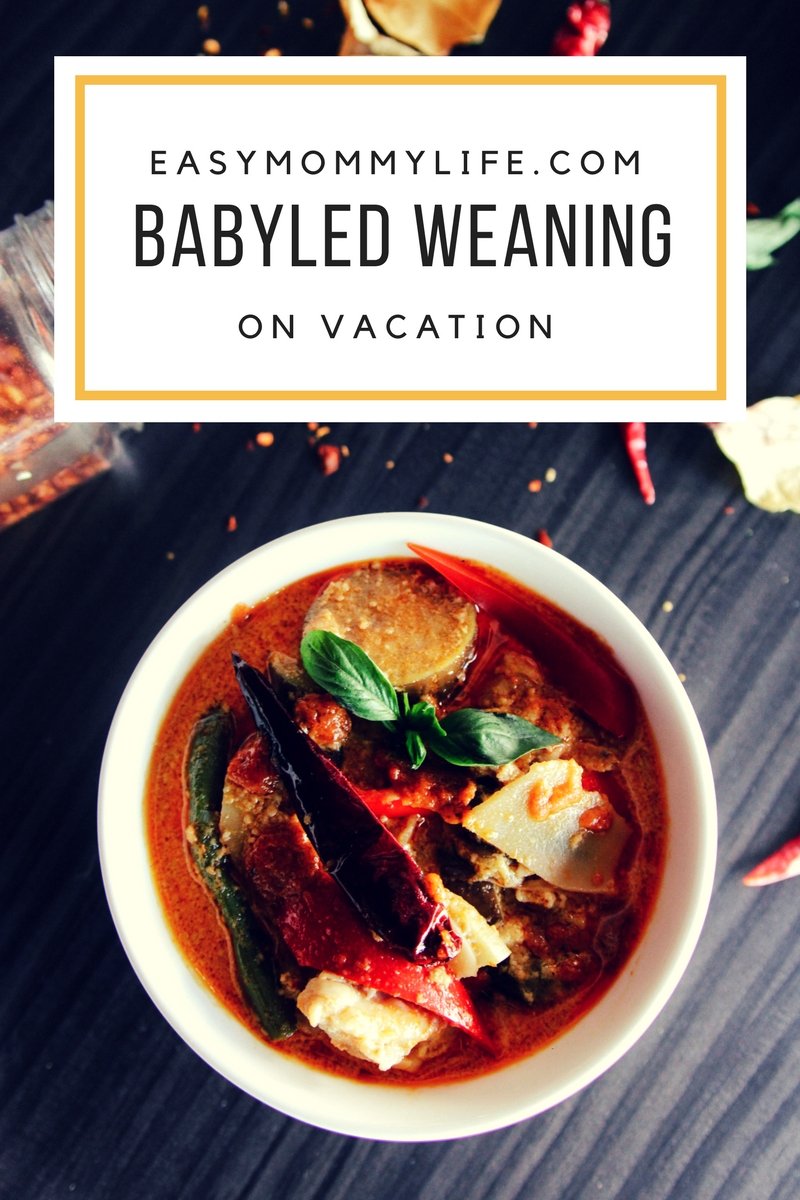
babyled weaning on vacation

There is a lot to consider when planning a trip with a baby. New parents worry about providing nutritious meals on vacation and rightfully so. With a baby led-weaned child it’s easier to provide from varied food options, albeit the mess! In this post, I shed light on how to prepare for the trip.

If you are new here, check my first post introducing moms to the concept of babyled weaning, before you start.

Now back to babyled weaning on vacation.

Points to consider

  • What type of vacation are you planning? Local/Abroad
  • Length of the Vacation
  • Age of your child. Is the vacation going to be in the initial stages of babyled weaning or once the baby is more advanced with their eating skills?
  • Equipment to carry
  • Type of accommodation; will it be an accommodation with attached kitchen (where you can prepare meals) or a hotel room.
  • Will there be periods of intense travel with minimal access to fresh food like airplane journeys, long bus/train rides, long car drives.

How to prepare?

If your baby is 6 – 8 months old you may be still primarily breastfeeding or bottle feeding. At this stage, you have to plan about 2-3 meals a day. These can be simple finger foods, fruits & food pouches.

If your baby is older than 8 months plan extra meals or snacks along with the regular 2 – 3 meals.

Any vacation is bound to affect the baby’s routine. It’s best to be mentally prepared for any curveball that’s thrown your way. Always carry snacks like rice cakes, fruits, natural yogurt pots, cheese for any eventuality. Many baby led weaning moms also prefer to carry a few food pouches for baby on the go. It’s always good to have them as backups.

I will get into details of what can be fed to your baby in the next post; in this post let’s look at some preparations you will have to do prior to your trip.
babyled weaning on vacation, bowl of thai soup

Packing tips

  1. A portable booster chair which is lightweight and easy to wipe down.
  2. Carry a LOT of wet wipes. There are going to be messes! You have to be prepared.
  3. Carry a few Ziploc bags. They are handy to dispose of leftovers on the go.
  4. Pack your own baby’s bowls and plates. Preferably with a suction base. This helps when you are eating at restaurants or lovely hotel rooms. You don’t want baby flinging the plate in the air.
  5. Crumb catching bibs are super useful during travel.
  6. Pack foods that can be cooked even with a kettle of hot water like instant oats, homemade baby porridge mix.
  7. Buy reusable pouches, these are great for packing oats/homemade khichdi/thick soups and carrying on a long plane journey or car rides.
  8. If you have a kitchenette available in the hotel room you have more flexibility. You can pack rice, dal, quinoa, pasta, beans etc. Carry all staples you can think of to make quick meals. The hotel room will have sachets of pepper which can be added to give food flavor.
  9. Pack a small frypan and saucepan this helps to make quick meals like scrambled eggs, oats, porridge etc.

Our Experience

We found booking vacation homes through Airbnb more comfortable as it allowed us to be in control of the food we prepare for our baby. We prefer a vacation home as it comes with a kitchen. On our trips, we would feed him in the room and then go out between meals for sightseeing. This vacation routine put him at ease too, since he started expecting his meals at the room and snacks on the go.

When Airbnb has not been possible we have checked with the hotel for kid-friendly meals. Most hotels are happy to oblige. Breakfast we ate at hotel buffets. For all the other meals I planned a menu of what to feed my baby in advance. That way I felt better prepared to handle any changes that happened.

I hope my post on preparing for travel with your baby led weaning baby helped. In the next post, I will cover what can be offered to baby on vacation and a look at what Little A ate on one such vacation we took. See you in the next post!

Baby Led Weaning Guide For Indian Mothers

Baby led weaning child holding a bowl of food

I stumbled upon baby led weaning when my son was 4 months old. Being a rather unfamiliar method of weaning in India; the literature was sparse in the Indian context. In this post I’ll address some of the concerns Indian moms might have regarding first foods, choking, appropriate gear for baby led weaning, nutrition and much more. Let this post be your baby led weaning guide.

WHY DID I WANT  TO START WEANING THE BABY LED WAY?

As a child, I was a fussy eater and know firsthand how much I hated being cajoled into eating. This became the primary reason why I wanted my son to be in control of how much he wanted to eat.

So,

What is Baby Led Weaning?

Baby led weaning is a method of weaning where the baby is allowed to explore his/her food and self-feed from the age of 6 months. The baby controls how much he/she eats, dines with family and eats what the family eats.

The method seemed perfect in my setup – a nuclear family with a traveling husband. It would cut down on special food preparations and the idea of my kid becoming an independent eater was very appealing.

On a side note – I hold nothing against traditional weaning as long as your child isn’t force-fed and his/her hunger limits are respected. I believe that a basic respect of child’s hunger cues is more important than the ongoing debate on the internet about pros and cons of traditional weaning versus baby led weaning.

Now, let’s address the two elephants in the room:

Choking

Choking is by far the biggest concern for any parent. It is important to note that a baby’s gag reflex is in the front of the mouth which prevents them from choking on food. Babies gag when they are not ready to swallow a big chunk of food.

When a baby chokes their entire airway is blocked, they go silent and may change color in face. Whereas in gagging they cough and look uncomfortable. Make sure never to offer high risk choking foods. Check that every food offered is soft enough to turn to mush between your thumb and forefinger.

A September 2016 study published in the Journal of Pediatrics found that baby-led weaning did not cause more choking than traditional spoon-feeding. (Fangupo et al., 2016).

I have provided an exhaustive list of foods that should be avoided below.

It is very important to understand the difference between choking and gagging. I found this article very helpful in understanding the difference between the two.

Iron rich foods for Baby led weaning

Iron becomes a hot topic of discussion in baby led weaning groups. Breastmilk stores of iron start to drop post 6 months, therefore, it is important to incorporate iron rich foods into your baby’s diet.

Examples of iron rich foods for baby led weaning are Cereals, lentils, legumes, chicken, red meat, egg yolk. Check this post for more detailed ideas about iron rich foods for baby led weaning.

And always remember, if you have concerns about any specific nutrient deficiency you must consult your pediatrician and get blood work done.A list of iron rich foods

What are the first foods for Baby Led Weaning?

As a guideline, cut all foods in long strips so it’s easier for baby to grasp in their tiny palms. Here are a few examples of foods to offer a 6 to 9-month-old:

  • Ripened: Banana, Papaya, Mango, Sapota (Chikoo), Muskmelon, Avocado;
  • Steamed: Apple, Pear, Pumpkin, Cauliflower & Brocolli Florets, Idli;
  • Boiled: Dal, Potato, Sweet Potato, Egg Yolk
  • Cooked: Chicken Liver, Oats, Ragi & Oats Pancake, Scrambled Egg Yolk.

Around 9-10-month-old babies get better at eating due to development of pincer grasp. This is a good time to offer family food in sizes appropriate for pincer grasp.

Always start weaning by introducing one new food at a time and trying it for 3-5 days depending on allergy history of that food in your family.

Choking risk foods

I steered clear from offering any hard raw fruits like apples, pears, grapes etc. for more than a year of baby’s life. Also, I didn’t feel comfortable offering steamed carrots as they always felt to be not soft enough.

It is best to avoid,

  • Whole Nuts
  • Whole Seeds
  • Hard raw fruits (e.g. Apples and Pears)
  • Foods with thick peel (e.g. grapes, plums, tomatoes)
  • Popcorn
  • Chips
  • Lotus Seeds (e.g. Makhane)
  • Raw salad leaves
  • Big chunks of meat
  • Bony Fish

For a more detailed idea of what foods to avoid, I found this link by the New Zealand Ministry of Health very helpful. (Ministry of Health NZ, 2012)
Baby led weaning essentials

Baby Led Weaning Essentials

  • High chair:

    One that is easy to clean. Expect a lot of mess with baby led weaning. So it’s best to have an easy to manage chair.

    • I would recommend the Chicco Pocket Lunch High chair. We used this from the beginning of our BLW journey. It is easy to clean by spraying some water and wiping off. Once a week I pull out the cover and wash under hot water with some soap. The chair comes with a large tray so a lot of the mess stays on the tray itself.
    • Another very popular option is the Ikea Antilop High chair. You can find similar designs to the Ikea Antilop in the Indian market on all the leading retail websites.
  • Booster chairs:

    • I recommend Fisher Price Quick Clean N’ Go Booster. It’s cheap, lightweight, easy to clean, comes with a shoulder strap and has a built-in wipes compartment. This makes this booster the ideal travel companion. Amazon always runs deals on this booster.
    • My second recommendation is Mastela Deluxe Comfort Folding Booster Seat . It’s also easy to clean and lightweight. Additionally, it has a two-level height adjustment which can be used for older toddlers (up to 30 months of age). The only con is that it doesn’t come with a shoulder strap so it’s inconvenient to use for travel.
  • A plastic spray bottle:

  • Feeding plates:

    • Buy plates and bowls with a suction bottom. Babies end up throwing the bowl on the floor and suction bottom is a real effort saver. These bowl and plate sets by Avanchy are very sturdy, made of bamboo wood with silicon headed spoons. The spoon is wonderful for those soft gums and also double up as a teether. To know about our experience using this set head to my post on Avanchy bowl and plate review.
  • Cups:

    • There are varied types of cups available in the market. There will be a lot of trial and error and you have to figure out which one works best for your baby.
    • My recommendations are; 1) Regular stainless steel cup: works from 6 months up, 2) Philips Avent Classic Soft Spout: 6-12 months, 3) Philips Avent Straw cup: 12 months up.
    • For a more detailed review of available Sippy cups in India read this post of mine.

Other Points To Consider

One of the basic tenants of baby led weaning – “The baby eats what the family eats” is not without its caveats because not all families follow healthy diets. The food offered to the baby maybe heavily processed, devoid of nutrition and high in sodium. Parents need to be aware of their children’s nutritional needs and plan healthier family meals.

Most family foods can be modified for your baby by cutting out salt, sugar and reducing spice. An easy alternative is to steam the vegetables separately if you are making a spicy version for yourself.

Also baby requires more fat than adults; if your household follows a low-fat diet then consider adding a side of grated coconut chutney, ghee on chapattis/dal/rice or avocados just for baby.

A 6 to 9-month-old baby is still mastering the pincer grasp making it difficult to properly eat a typical Indian meal. Start out with finger food versions of family meals and slowly ease into a complete family meal as the pincer grasp improves.

Another point that comes up repeatedly is, explaining baby led weaning to the extended Indian family. Here you may have to hold your ground more than a few times. Once non-consenters see the baby eat on their own, they too are proud. Stay patient, its best not to get stressed. Ultimately only the parents are the best judge of what suits them and their baby.

Our Experience With Baby Led Weaning

The idea of a self-feeding baby always appealed to me. There are videos online of 6 to 7-month-old babies eating big chunks of meat off the bone, while its quite an attention getter – I wanted to proceed more gently.

What I loved about our experience with baby led weaning was the freedom from elaborate meal making for me and independence it offered my child from the onset. We introduced him to a wide variety of fresh fruits and vegetables in the first year. And it is amazing watching just how quickly our little humans pick up all the skills. Baby led weaning and “no pressure tactics at the table” allowed him to be a great eater and a happier child.

To sum it up

  • Feeding your child should focus on sharing in the joy of eating healthy and nutrient-rich foods. Don’t worry too much about the rules!
  • If your baby is having a difficult time with baby led weaning you can always try pre-loaded spoons or switch to traditional weaning.

Whatever ways you choose to wean you need to be respectful of your baby’s hunger. If they squirm and move their head side to side, spitting out what you feed, stop the session. Try again later. An unhappy baby at the table will never learn to associate food time with positive interactions. You have to be patient and let your child lead.

Related Posts On Baby Led Weaning

Baby led weaning first foods: What to offer?

7 Baby Led Weaning Benefits No One Tells You About

Baby Led Weaning Finger Foods On The Go

5 Baby Led Weaning Tips For Success

6 Healthy Baby Led Weaning Lunch Ideas

Baby Led Weaning Food Ideas For Busy Moms

Baby-led Weaning On Vacation (Part 1)

Baby-led Weaning On Vacation (Part 2)

Baby Led Weaning Breakfast Ideas

Resources:

1] Fangupo, L., Heath, A., Williams, S., Erickson Williams, L., Morison, B., Fleming, E., Taylor, B., Wheeler, B. and Taylor, R. (2016). A Baby-Led Approach to Eating Solids and Risk of Choking. Pediatrics, 138(4), pp.e20160772-e20160772.

2] Baby Led Weaning: A Complete Guide to Choking & Gagging. (2014). [Blog] Baby Led Weaning Equipment. [Accessed 10 May 2017].

3] Ministry of Health NZ. (2012). Foods that pose a higher choking risk for children under five years. [Accessed 10 May 2017].[/box]

Disclaimer: This is a parenting blog. The opinions expressed here represent my own and do not replace professional medical advice. Consult your pediatrician and nutritionist for any concerns you may have.
This blog post contains affiliate links. These links provide me with a small percentage commission but don’t cost you anything extra.